is AI gonna replace me? I want a better one
Maybe the most common question on people's minds right now — especially younger people, either just entering the job market or already in it and thinking about their future — is whether AI is going to replace them.
I want to share some thoughts on this. Most of it isn't backed by research. It's just my own thinking, built from experience and things I've seen and heard. I'll say upfront: I'm someone who still thinks AI is a bit weak in some ways. I actually want it to get smarter, faster, more powerful — I'll explain why toward the end.
Here's what I think happens with AI: it can take over anything that's operational. Meaning — a task someone's been doing that never actually required thinking, creativity, or emotion.
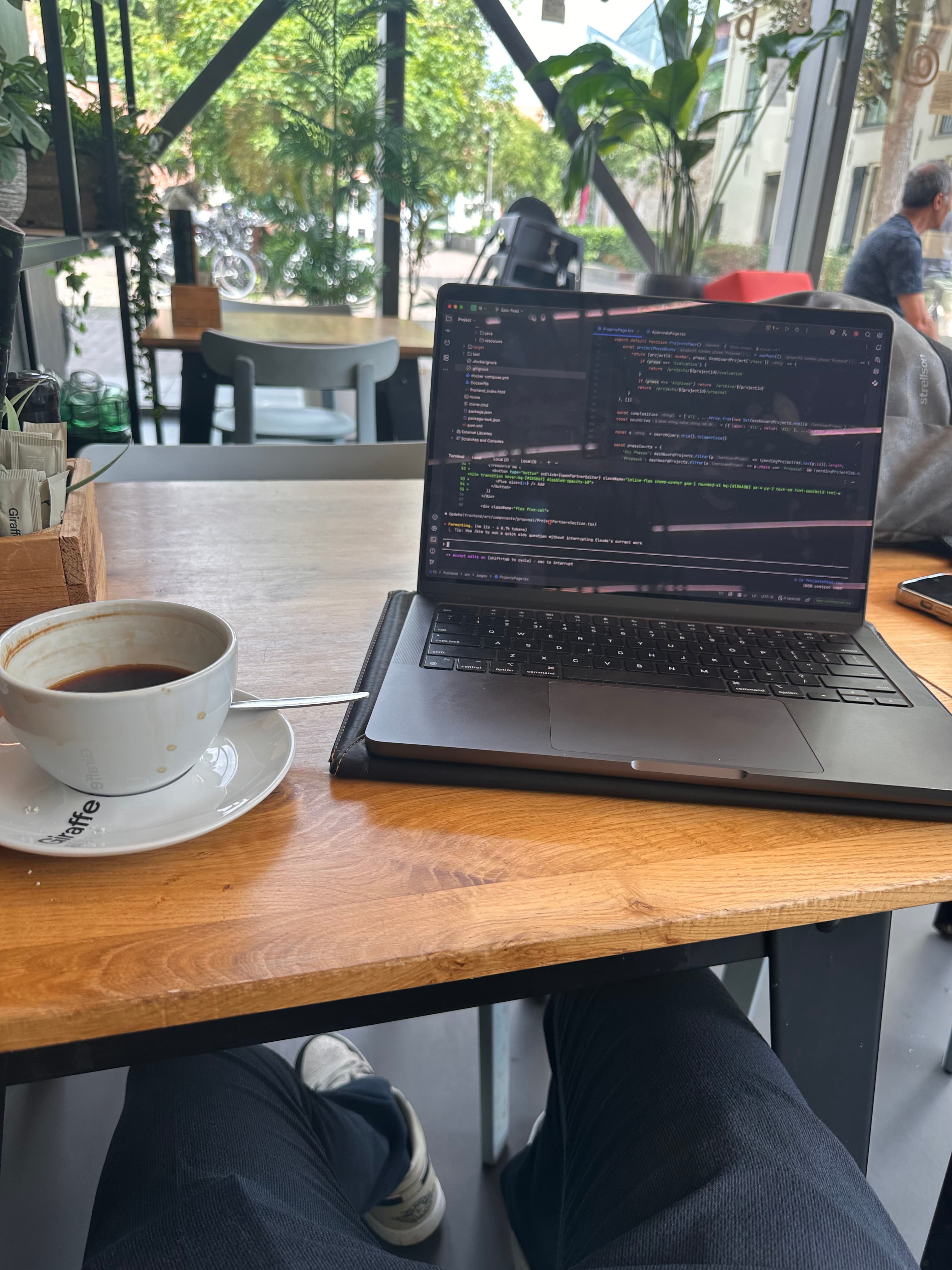
I have a story that always comes to mind here. In university, we had a group project — building a real product for a client. Fifteen of us, split into sub-teams: frontend, backend, database, and so on. I worked on backend. The first thing I noticed — and this was right after I'd moved to Europe, so working in a big group like this was new to me — was that almost everyone gravitated toward backend and avoided frontend. People seemed to actively dislike it.
That stuck with me, because I'm a curious person — whenever something doesn't line up with how I see things, I want to know why. As the project moved forward, I noticed it was turning into something very plain. It worked, it had functionality, but it was completely generic — exactly the kind of result you'd get if you handed the same brief to fifty different fifteen-person teams and let them just go. So I started pushing, again and again, for us to make it different. Not to prove we were special, just to have some kind of edge over the other teams.
Almost the entire team disagreed with me. Their reasons: no time, the scope was already fixed with the client, nobody wanted to get into the thinking part — the ideation, the design. And what I eventually realized was that everyone had learned two things: they had a tool now that let them code easily, and they'd found a pattern that worked. To me, frontend needs creativity and thought. Backend needs a stable structure — something proven that already works, where you can lean on AI tools to move fast, as long as you understand what's actually happening.
What I saw was that people wanted the safe option — something that didn't need thinking or creativity, where they could just say "this is the structure, it works, done." And here's the thing: those are exactly the people who should be worried about AI replacing them. Because the work they were already doing is work AI can do. When you don't need to think, don't want to create, don't want to bring about change — in any field, not just software — AI will replace you. If all you want is what already exists, AI has already mastered that, and it can do it a hundred times better and a hundred times faster, because it's already been done and AI has been trained on it.
If you never face that fear, if you never put in the effort to build creativity, if you never take on the difficulty of actually thinking — you become someone whose thinking narrows down to a few fixed, learned patterns. And AI will replace exactly that person, because you're doing exactly what's already been done — something AI has already mastered and can do faster and smarter than you.
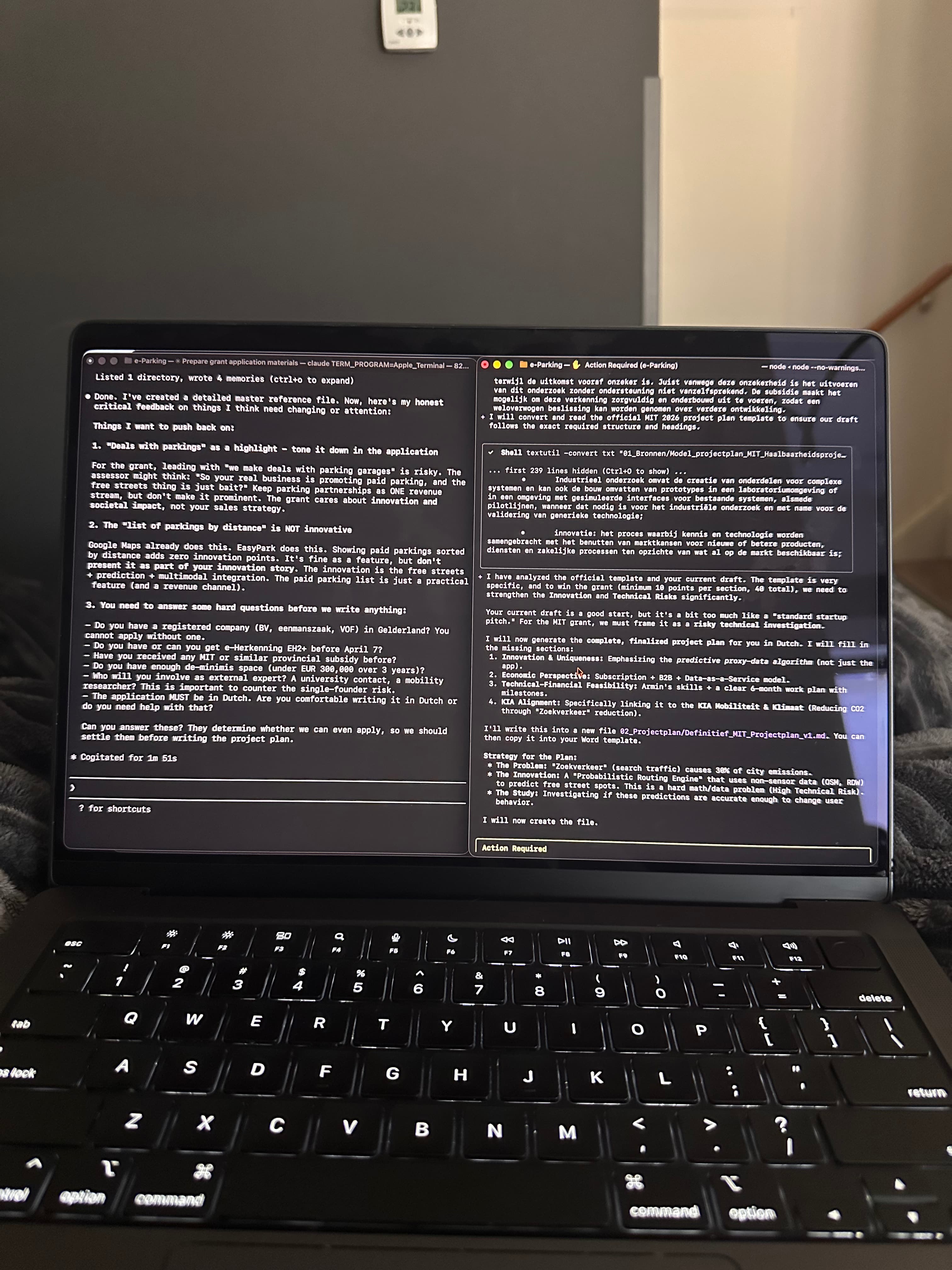
The real question, to me, is creativity. A human who has creativity, who can see something from different angles, who can think and actually wants to think — that person can't be replaced. Not by a new tool, not by another person. Because that person is constantly producing something new, and that act of creation is tied to their thinking — and I think that's exactly where people differ from each other so much, because it comes from that person's experiences, emotions, memories, thoughts, the people around them, the things that have happened to them, their egos, their shadows — things that are genuinely unique to every individual. All of that comes together, through constant thinking and creativity and the drive to make something different, to produce something that no machine can replicate, no matter how much you show it or train it — because a machine isn't living our daily human life. It can't produce something new that's truly shaped by real human life. It can make what already exists better, faster, nicer-looking — but it can't play with our emotions, because our emotions come from the real world, and only something rooted in the real world can actually shift them.
Unfortunately, we've gotten to a point where AI is making us think less, need less study and knowledge, and just do a set of tasks and make life easy for ourselves — avoiding the discomfort, the difficulty of sustained thinking. That's exactly where our creativity gets sidelined and stuck. We turn into people who've figured out one thing, decided to stay in that comfort zone, and keep repeating the same tasks. And the bad news is: whatever's already been done, AI can do again — even something you're doing for the very first time, right now, can be trained on and reproduced. So if you can't grow your own creativity, if you can't take on the difficulty of thinking, if you can't push past your fear of failing or messing up — at some point, AI takes your place.
Which brings me back to what I said earlier — I still feel like I need a faster AI, a smarter one. There's still a lot of room to grow, at least for what I need. Not because I think I'm especially smart or creative — I'm not trying to claim that — but because I'm a curious person. I like doing different things, trying new things, bringing new things into existence. AI has given me the ability to satisfy that curiosity without needing big teams, huge amounts of time, or real budget. And for people like me, who want to create a lot — good or bad — that ability is still limited. I'm impatiently waiting for a more powerful AI, with bigger context, faster and smarter, so I can actually use it toward my own life and the things I want to make — instead of spending my time wondering what it might replace, or whether I'll be the one replaced. That's it.
Join the conversation
1 person has shared their thoughts. Add yours below.
That is exactly the thing.