Armin Eslamieh
Based inAmsterdam, NL
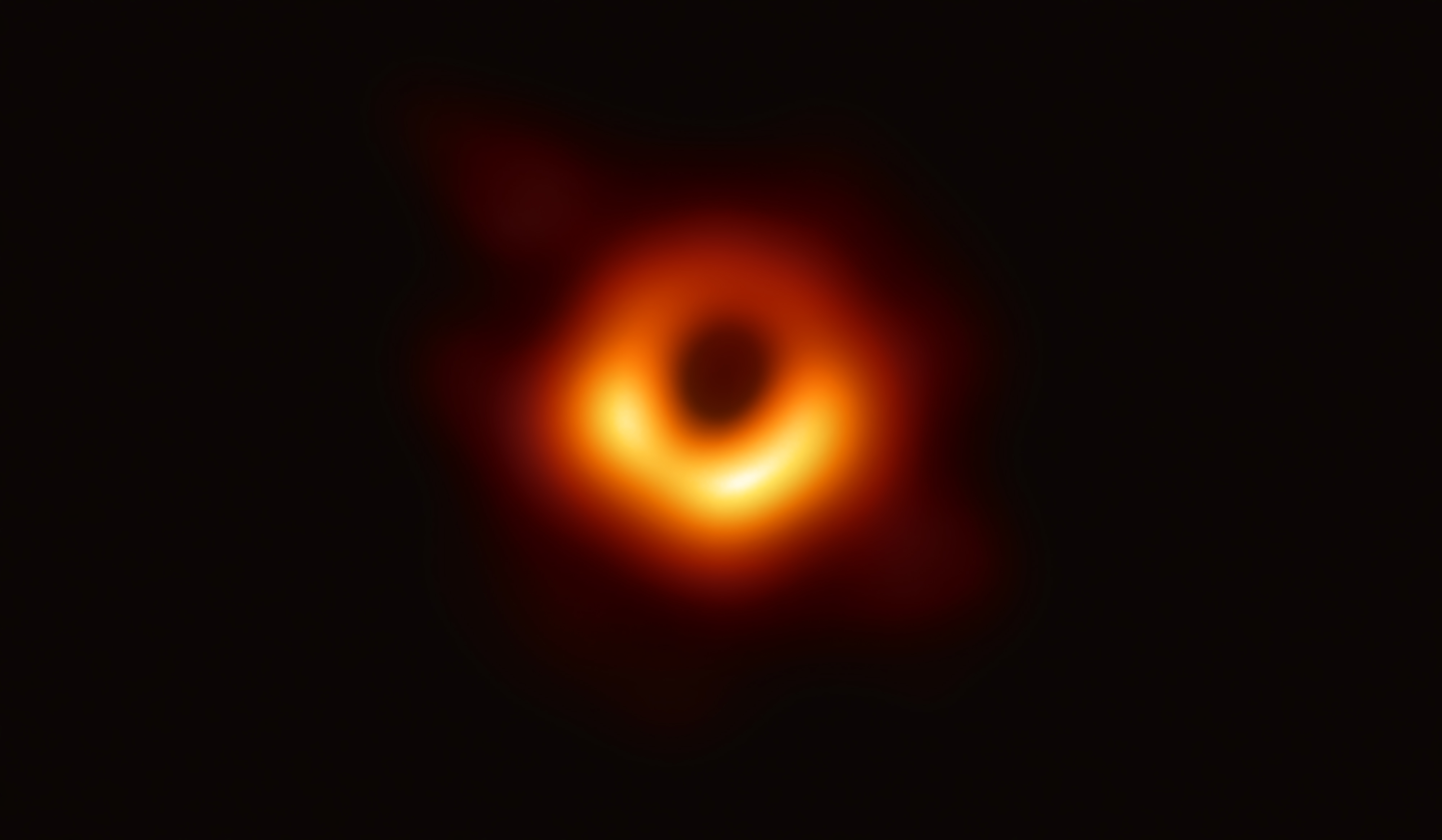
M87 black hole captured by the Event Horizon Telescope

M87*— the first black hole ever imaged, captured in 2019 by the Event Horizon Telescope. You'll find this image throughout my work and almost everywhere connected to me.

Thoughts

In my opinion, we people seem very far and strange from each other. However, I think inside we have a lot of common things. We are kind, we care about each other, but we are scared of each other at the same time, because we do not know anyone, and this BLACK HOLE of emptiness about anything makes us scared. We just need to be aware of each other's THOUGHTS.

Thoughts01/03
#projects#learning
8 min read

Me vs Elon Musk or Me vs I?

All of us — especially those of us close in age — always look up at big people. Rich people, people we look up to for whatever reason. We follow how they live, what they did, and we're constantly comparing ourselves to where they are now. There's a question almost everyone's asked themselves at some point: what's actually different between me and that person? I don't want to talk about the obvious answers — where they started, what kind of life they had, what country they were in, how much money they had. All of that is true. People's circumstances are different, and what someone can do at what age depends a lot on that. That's not what I want to get into. What I actually think about is the way different people think, and how they see life. How we think, how well we know ourselves, how we look at life — that, to me, is the real difference between an ordinary person like me and someone who's extremely successful in every sense. If I break that down — and this is purely my own opinion, no scientific backing at all — I think it starts with how well we know ourselves. How honest we are with ourselves. How aware we are of what we like and dislike. How close we actually are to ourselves. That self-knowledge matters a lot, because when we're about to take a step, it lets us predict whether that step is the right one — since every decision we make is shaped by how we think about it. If we know ourselves, we can take a step in a way we know will actually fit us later, that will cost us less down the line, and move forward faster and better. So the first thing, I think, comes down to self-knowledge. ![me vs elon musk or me vs i](https://res.cloudinary.com/gnvnhxxp/image/upload/v1785191691/IMG_0263_dq8mym.jpg) The second thing is understanding that luck matters a lot. You've heard that before too — but I'm not talking about good luck or bad luck. I'm talking about things happening. Things that can be predicted, or can't. I don't want to get into that debate. What I want to say is: things happen. Some are good, some are bad. And it's human nature to want to control everything — not for a sense of power, but because that's what the mind needs, to keep us alive as much as possible. That's what the brain does to protect us: it tries to stay somewhere it already knows, tries to push back against everything unknown, tries to pull you away from the unknown for any reason it can find — because the unknown lowers your chances of survival, since it doesn't know what's coming. So a mind built this way tries to trap you, tries to control everything, and refuses to accept that some things will happen that we simply have no way of knowing about in advance. We don't know what those things are. But because this mind wants everything under control, it ignores that part of reality entirely and puts the whole weight of it on our shoulders. And when we see that huge pile of responsibility, we think: okay, I can't do this, or I'm worse than others, or weaker than others. But here's the thing — from my own experience, more than a hundred times, things have shown me outcomes I never expected, things I had no idea about, and turned out — I won't say a hundred percent, but at least ninety percent of the time — for the better. Call it coincidence, call it luck, call it the existence of God, whatever you personally believe in. The point is: these things are out of our hands, out of our control, and we need to learn to let go of that need for control and let part of our path happen on its own. In short: if we think we can't do something, that's a very natural feeling. But we need to understand that if we actually do the work, part of it will move forward on its own, through chance, through luck, through whatever you want to call it. So when something feels too big and we feel like we can't control it, we don't need to just let it go — because from some point on, whatever needs to happen will happen, shaped by things we have no idea about. So we don't need to hold onto that much control. The last, and most important thing that comes to mind, is just doing the thing. When the scale of something feels too big in my head — when I don't see myself as capable enough to control it, bring it into being, manage it, carry it forward — I don't do it. Not because I've told myself outright "you can't." Maybe I wouldn't say it that bluntly. But my brain, through the stories it builds, quietly writes it off, and finds ways to justify that feeling of not being capable. ![me vs elon musk or me vs i](https://res.cloudinary.com/gnvnhxxp/image/upload/v1785191691/IMG_0264_kozn2s.jpg) But from my own experience, from what I've read and thought about — and maybe I'm wrong, I don't know — I feel like just doing the thing is what causes the big outcome. I've always believed that people who did something big never actually set out to do something big. It was never that big in their mind. They just did a thing, and then, step by step, through what they kept doing and the path they kept walking, it grew like a snowball. It kept rolling forward, getting bigger and bigger, until it became a giant snowball. We look at it now and assume that giant snowball was in their mind from the very start, and that they walked straight toward it. I don't think that's how it happens. To me, becoming something, growing in any field, is actually simple: you just do the thing. You do the work and let it move forward on its own, and take your brain out of that controlling mode — loosen its grip so it doesn't try to control everything so much. Whatever the conditions, you keep doing it — small or big — and over time it gets bigger and bigger. Somewhere along the way it might break. That's fine. It was part of the road. For whatever reason it broke, and you can pick up a small snowball again and start rolling it once more, until it grows big again. But you can't start with a small snowball and expect it to become a giant one after just one roll. And like I said at the start of this — we always begin with a small snowball in our hands, while in our minds we're already picturing the giant one. So of course, looking at that small snowball, it feels like it could never measure up to the big one in our head. But if, instead of falling into that need for control, we just put the snowball down on some snow and start rolling it, slowly, at some point we look at it and realize it's become something enormous — maybe something we never even imagined. That's why I think doing something big requires passion, requires love — so we don't just get tired halfway through. If we're rolling and rolling this snowball, out of breath, exhausted, legs aching, back aching — we shouldn't stop rolling. And that, I think, comes from the love we have for that snowball. If we have that love, the most important thing after it is simple: just keep rolling. Don't stop. But we also shouldn't feel like the rolling itself is some kind of torment, something we only get to feel good about once we finally see the giant snowball. Because the same feeling a small snowball gives you — multiply it, and it's the same feeling, just bigger. So a giant snowball probably gives you the same feeling a small one does. But if we learn to enjoy every millimeter that snowball grows along the way, and actually live inside that progress, then by the time it becomes something giant, it won't really matter whether it's small or big. The real difference is that you look back and see that this whole time, you carried that snowball. You tried not to let it melt. You tried not to let it break. And you kept rolling it, and rolling it, until now it's turned into something big — something a lot of people can probably use. For all these reasons, I believe anyone can do anything. We just need to figure out how to fix the way our mind works, and point it toward the path we actually want to walk. Anyone can do whatever they want to do — the only real difference between people is mindset, and the way they choose to think. — Armin

What an inspiring article. I hope we see more of this content of your personal thoughts.” — Toss

July 27, 2026Read more →
#overthinks#learning
5 min read

is AI gonna replace me? I want a better one

Maybe the most common question on people's minds right now — especially younger people, either just entering the job market or already in it and thinking about their future — is whether AI is going to replace them. I want to share some thoughts on this. Most of it isn't backed by research. It's just my own thinking, built from experience and things I've seen and heard. I'll say upfront: I'm someone who still thinks AI is a bit weak in some ways. I actually want it to get smarter, faster, more powerful — I'll explain why toward the end. Here's what I think happens with AI: it can take over anything that's operational. Meaning — a task someone's been doing that never actually required thinking, creativity, or emotion. ![AI is replacing us](https://res.cloudinary.com/gnvnhxxp/image/upload/v1785190951/IMG_9503_qcapyw.jpg) I have a story that always comes to mind here. In university, we had a group project — building a real product for a client. Fifteen of us, split into sub-teams: frontend, backend, database, and so on. I worked on backend. The first thing I noticed — and this was right after I'd moved to Europe, so working in a big group like this was new to me — was that almost everyone gravitated toward backend and avoided frontend. People seemed to actively dislike it. That stuck with me, because I'm a curious person — whenever something doesn't line up with how I see things, I want to know why. As the project moved forward, I noticed it was turning into something very plain. It worked, it had functionality, but it was completely generic — exactly the kind of result you'd get if you handed the same brief to fifty different fifteen-person teams and let them just go. So I started pushing, again and again, for us to make it different. Not to prove we were special, just to have some kind of edge over the other teams. Almost the entire team disagreed with me. Their reasons: no time, the scope was already fixed with the client, nobody wanted to get into the thinking part — the ideation, the design. And what I eventually realized was that everyone had learned two things: they had a tool now that let them code easily, and they'd found a pattern that worked. To me, frontend needs creativity and thought. Backend needs a stable structure — something proven that already works, where you can lean on AI tools to move fast, as long as you understand what's actually happening. What I saw was that people wanted the safe option — something that didn't need thinking or creativity, where they could just say "this is the structure, it works, done." And here's the thing: those are exactly the people who should be worried about AI replacing them. Because the work they were already doing is work AI can do. When you don't need to think, don't want to create, don't want to bring about change — in any field, not just software — AI will replace you. If all you want is what already exists, AI has already mastered that, and it can do it a hundred times better and a hundred times faster, because it's already been done and AI has been trained on it. If you never face that fear, if you never put in the effort to build creativity, if you never take on the difficulty of actually thinking — you become someone whose thinking narrows down to a few fixed, learned patterns. And AI will replace exactly that person, because you're doing exactly what's already been done — something AI has already mastered and can do faster and smarter than you. ![AI is replacing us](https://res.cloudinary.com/gnvnhxxp/image/upload/v1785190946/IMG_8627_o0fy5e.jpg) The real question, to me, is creativity. A human who has creativity, who can see something from different angles, who can think and actually wants to think — that person can't be replaced. Not by a new tool, not by another person. Because that person is constantly producing something new, and that act of creation is tied to their thinking — and I think that's exactly where people differ from each other so much, because it comes from that person's experiences, emotions, memories, thoughts, the people around them, the things that have happened to them, their egos, their shadows — things that are genuinely unique to every individual. All of that comes together, through constant thinking and creativity and the drive to make something different, to produce something that no machine can replicate, no matter how much you show it or train it — because a machine isn't living our daily human life. It can't produce something new that's truly shaped by real human life. It can make what already exists better, faster, nicer-looking — but it can't play with our emotions, because our emotions come from the real world, and only something rooted in the real world can actually shift them. Unfortunately, we've gotten to a point where AI is making us think less, need less study and knowledge, and just do a set of tasks and make life easy for ourselves — avoiding the discomfort, the difficulty of sustained thinking. That's exactly where our creativity gets sidelined and stuck. We turn into people who've figured out one thing, decided to stay in that comfort zone, and keep repeating the same tasks. And the bad news is: whatever's already been done, AI can do again — even something you're doing for the very first time, right now, can be trained on and reproduced. So if you can't grow your own creativity, if you can't take on the difficulty of thinking, if you can't push past your fear of failing or messing up — at some point, AI takes your place. Which brings me back to what I said earlier — I still feel like I need a faster AI, a smarter one. There's still a lot of room to grow, at least for what I need. Not because I think I'm especially smart or creative — I'm not trying to claim that — but because I'm a curious person. I like doing different things, trying new things, bringing new things into existence. AI has given me the ability to satisfy that curiosity without needing big teams, huge amounts of time, or real budget. And for people like me, who want to create a lot — good or bad — that ability is still limited. I'm impatiently waiting for a more powerful AI, with bigger context, faster and smarter, so I can actually use it toward my own life and the things I want to make — instead of spending my time wondering what it might replace, or whether I'll be the one replaced. That's it.

That is exactly the thing.” — Kiana

July 27, 2026Read more →
#overthinks#experiences
5 min read

Who You Let In your life?

The first things always matter the most to me, I don't know why, but I feel like the impact of first things, first people — anything that's "first" — is somehow more special, more special than what comes after. And for this website, and for this part of the blog — maybe "blog" isn't even the right word for it, whatever it is — I kept thinking about what could be the most important thing, for me. And every time I think about that question, the way I always do, nothing comes to mind except people. Human beings. For the most important thing in this world — to me, people have always been it. The most important beings on this planet, to other people. Not for any other reason. I mean, to me, people are the most important thing in my life, at least. And these people can be anyone — people I dislike, people I love, people I don't know at all. Any race, any background, any country, any language — none of that matters. The most important thing, to me, is the existence of a human being in this world. That means something specific to me, in my own personal life. People often ask me why I'm so calm, so relaxed, why I don't seem to care when something happens, or why I don't get upset when something expensive breaks, or gets lost, or gets stolen — why I don't stress over it. And everyone assumes I'm just a careless kind of person. But that's not really how to look at it. It comes back to the same thing I've been saying from the start: the most important thing to me has always been people. I worry about people — about their lives, their health, their pain, their laughter, their happiness. Anything other than people might upset me a little, sure. Any change in things, in objects — that can be upsetting too. But it fades fast. Something of mine breaking, or a situation being taken from me, or something happening to my belongings — that might upset me for a moment. But because it matters so little to me compared to people, I genuinely can't let it affect my mood or my thinking, even if I wanted to. So to me, people matter because — I think — every person's life comes down to the people around them. The people they connect with. People who came for a while and left. People who stayed until the end. People who could have come. People who were there from the beginning, like family. People you spend a huge part of your life with, like friends. People you're meant to share the most private parts of your life with, like a partner. And people you're meant to give your whole life to, like a child. And the more I think about it, moving forward — okay, these are the things that make up a life. Not the phone I have, not the car I have, not the house I have, not how much money I have. And this isn't me trying to sound inspirational or preachy. This isn't about trying to sound like an Instagram reel. But the most important thing, at least in my mind, is that a person's whole life revolves around the people around them. That said, there's a warning I always carry in my mind. Because people matter so much to me, and because I believe so strongly that we're deeply shaped by the people around us — by who we let into our lives, and whose lives we let ourselves into — there's a real danger here. If we get it wrong, and we will, because we're human and mistakes are inevitable, we can end up taking our whole life somewhere that isn't good at all. And that's just from choosing the wrong person once. Now imagine someone who makes that mistake more than once — not just letting one wrong person in, but several. How much potential can that cost someone? How much can it waste? And I think that's exactly what it comes down to — the people around you. ![why you should be carefull of other people](https://res.cloudinary.com/gnvnhxxp/image/upload/v1785187467/IMG_0261_xir1zq.jpg) Which brings me to the next part: closeness. How close you let people get. If you let someone into your life who hasn't earned that closeness, who doesn't deserve the space you're giving them — and you become someone in their life who they haven't earned either — that same warning goes off again. Why? Because, in my experience — I haven't researched this scientifically, this is just what I've seen — people tend to think they're always the smart one, the important one, the capable one. And if someone genuinely doesn't deserve you — and I don't just mean a partner, I mean a friend, an acquaintance, a coworker, anyone — if the gap between what you deserve and what they deserve gets too wide, that warning comes back. Because if you're above someone, and that person naturally sees themselves as important (like I said), they'll try to pull you down instead of pulling themselves up. Now, if someone genuinely tries to rise to meet you instead — I wouldn't put that person in the same category as someone less worthy or less deserving than you. Someone who's always trying, who chooses to lift themselves instead of feeling jealous or dragging others down — that person deserves more than most. But someone whose worth is lower than yours, in whatever sense you mean it, and who — instead of trying to reach your level — tries to pull you down to theirs so you end up equal — that person doesn't deserve much. Either way, people in a relationship eventually end up at the same level. Either they're both trying to rise and meet in the middle, or one is pulling the other down until they're equal. That's why it matters so much who we let into our lives, who we get too close to too fast, who we hold onto longer than we should. And the last thing that matters a lot — bringing the wrong person into your life, and then letting go of them. Sometimes we let the wrong person in, and at some point we realize it. I'm not just talking about a romantic relationship here — this person could be a coworker, a friend, your partner's partner (emotionally), or anyone you're connected to. Letting someone in, and then failing to let them go — that might be the biggest blow a person can deal to themselves. And I think this is something almost universal — we all know we've let the wrong people into our lives at some point, and we can't seem to let them go, for whatever reason. Maybe attachment. Maybe because out of a hundred bad things about them, there are two good ones, and we cling to those two and can't walk away. For me personally, the reason we struggle to let go usually comes from something inside ourselves — some issue, some wound, some ego, some shadow we're carrying. And maybe that person, without meaning to, has touched exactly that shadow — the thing we can't quite detach from — and that's why we keep holding on and can't let them go. Where's the actual problem? I always think of it like this: imagine you paid for a movie ticket and sat down for a two-hour film. Thirty minutes in, you realize the movie is terrible, and you've wasted that thirty minutes. There's still an hour and a half left. Now you have two choices — either write off the money you already spent and just leave and use your rest of the time for something more useful, or just say that I have paid for this movie so I have to sit and watch the whole movie and waste your whole two hours. ...it applies just as much to letting new people into our lives. And if the fear of "what we've already invested" stops us from walking away from a bad situation — from letting go of a person who might be good, might be bad, but for whatever reason isn't right for you, isn't right for your peace of mind — even if we don't mean to, we end up hurting ourselves by not letting go. And I think there are a lot of small, unrelated differences like this in life, differences and details that can quietly take our potential and turn our life into something worse than what it could have been. ![why you should be carefull of other people](https://res.cloudinary.com/gnvnhxxp/image/upload/v1785188354/copy_of_img_0262_hl3gjo.jpg) So if I try to sum up everything I've been overthinking here — it comes down to this: the existence of other people, for people, matters this much because a person's life is genuinely shaped by the people around them. Coworkers, a partner, friends, family, children — this is what shapes a person's life, in my view. And that's why, in my own mind, I place such enormous importance on human beings — not on things. This is just my view. I'm not saying that if something else matters more to someone else, they're shallow or wrong. People are different, priorities are different. But for me, what determines a person's life — or at least determines mine — is the effect other people have on my own mind and soul. And that's why I put almost all of my effort into focusing on people, and on my relationships with them, more than on anything else. That’s it.

July 27, 2026Read more →
Amsterdam, NL

--